










Legoland Discovery Centre, Scheveningen
Tekst Architectenbureau Filip Mens
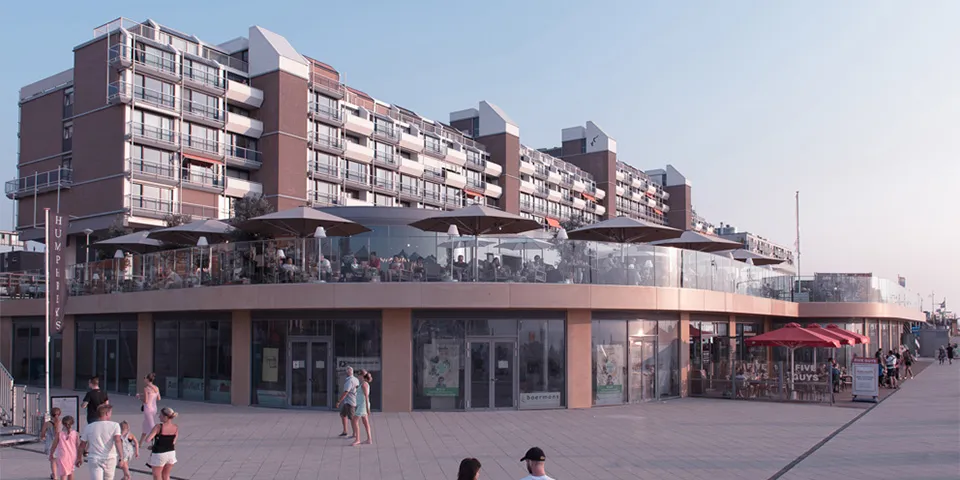
The building for a Legoland Discovery Centre (LLDC), with a hospitality pavilion above it, has been built on the site of the former Vitalizee. The old Vitalizee had to be demolished to make way for a basement (a space of 3,000 m2) for the LLDC. This also provided an opportunity to give this section of the buildings along the Boulevard a major upgrade, alongside the planned renewal of the North Boulevard as an extension of the Boulevard to the south of Sealife, which had already been redeveloped.
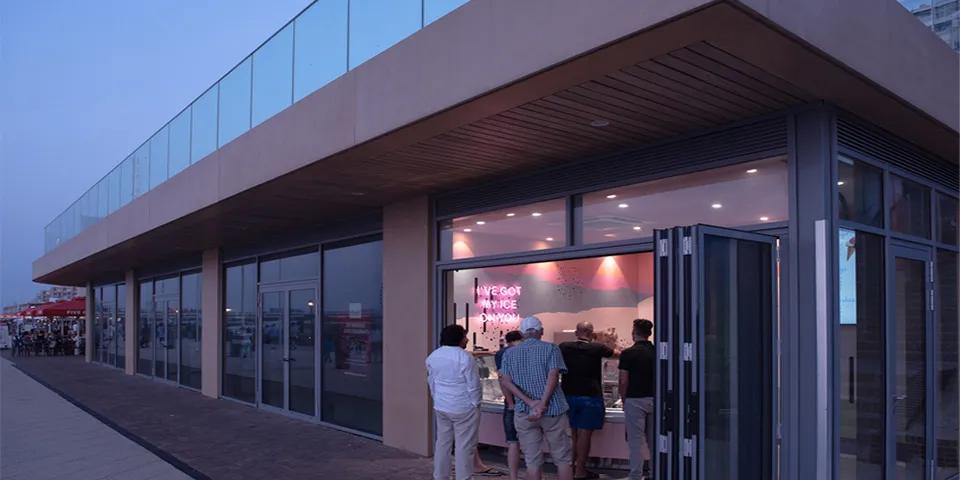
The former Vitalizee building was characterised in particular by a relatively closed façade on the seaward side, with the entrance at the level of the landing of the public staircase between Rederserf and the Boulevard.
In addition, the two-storey building had limited floor-to-floor heights. The design and materials of the new LLDC building and the hospitality pavilions will be much better suited to the renewed public space. The façade on the seaward side has effectively been turned around to include the new public staircase between Rederserf and the Boulevard, which is yet to be built. This has created a single long frontage with an unobstructed view of the entrance to and shop at the Legoland Discovery Centre.
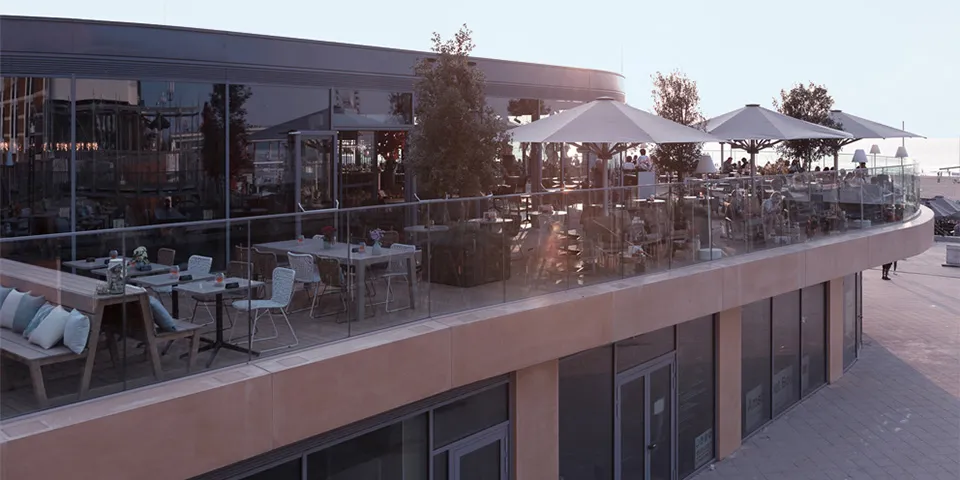
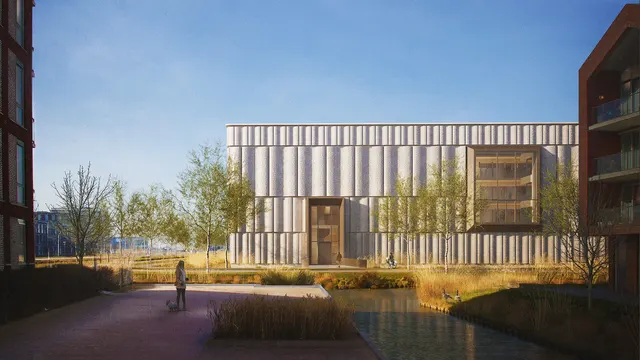
The frontage therefore faces not only the Boulevard, but also the route taken by many people travelling between Gevers Deynootweg and the beach. Three hospitality spaces are located along the Boulevard next to the entrance to the Legoland Discovery Centre. The ground-floor façades of both the LLDC and the hospitality spaces consist of a row of precast concrete piers with coloured aggregate. An aluminium curtain wall between the columns ensures maximum transparency.
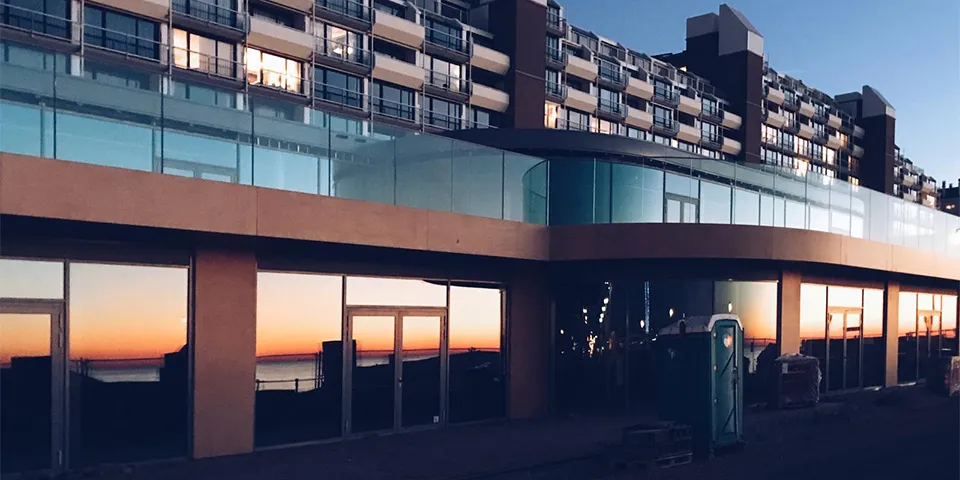
There is only limited space for a terrace at Boulevard level in front of the hospitality space. A terrace has therefore been provided above the entrance to the LLDC and the ground-floor hospitality space. It is accessed from Rederserf and from two glazed hospitality pavilions on the first floor. These pavilions are partly associated with the ground-floor hospitality space. The terrace also acts as a ‘stepping stone’ between the different levels of the promenade and Rederserf.
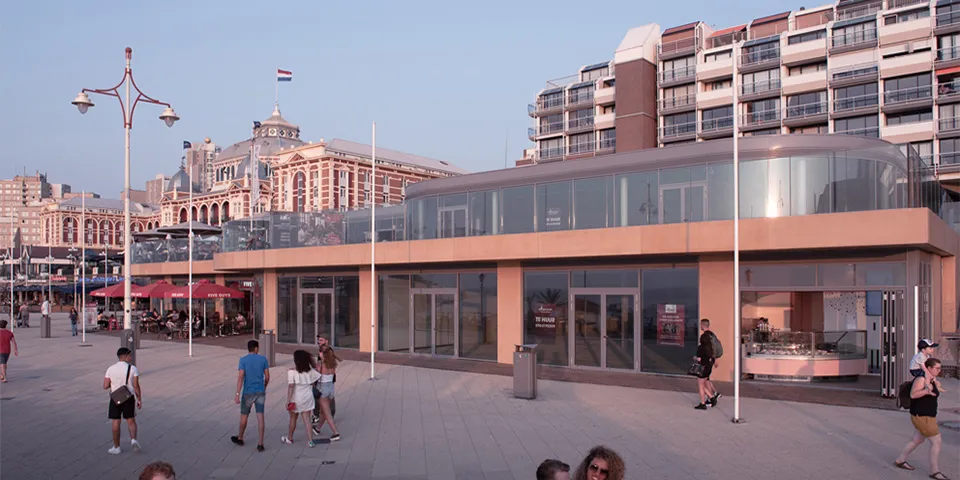
The terrace, with a balustrade of toughened laminated glass, projects slightly over the Boulevard. This not only creates additional floor area, but also provides a sheltered spot at Boulevard level along the façade, with views of the beach and sea. The underside of the overhang is clad in timber and fitted with recessed spotlights. Rounding off the corners of the ground floor and the hospitality pavilions serves several other purposes: it preserves better views of the monumental Kurhaus when approaching from the south and better guides the flow of people to and from the so-called Winter Boulevard (Rederserf). It also gives the building a softer appearance. In addition, it helps preserve views of the sea from Rederserf, an important urban-design principle of ‘a healthy coast’.
Client
Sens Real Estate
Contractor
Stebru Bouw
Architect
Architectenbureau Filip Mens
Photographs
Alrik Swagerman
Vraag over dit verhaal? Stel je vraag
Wie eraan werkte
Legoland Discovery Centre
- opdrachtgeverSens Real Estate
- aannemerStebru Bouw
- architectArchitectenbureau Filip Mens
Blijf dit volgen
Bij een nieuw verhaal krijg je een e-mail. Geen account nodig.
- ProjectLegoland Discovery Centre
- OnderwerpProjects
- BedrijfSens Real Estate
- BedrijfStebru Bouw
- BedrijfArchitectenbureau Filip Mens