A new switchboard for the Zuidplas region
Tekst Tjerk van DuinenBeeld Tjerk van Duinen en Tennet/Chris Pennarts
High-voltage substations in Zevenhuizen and Bleiswijk
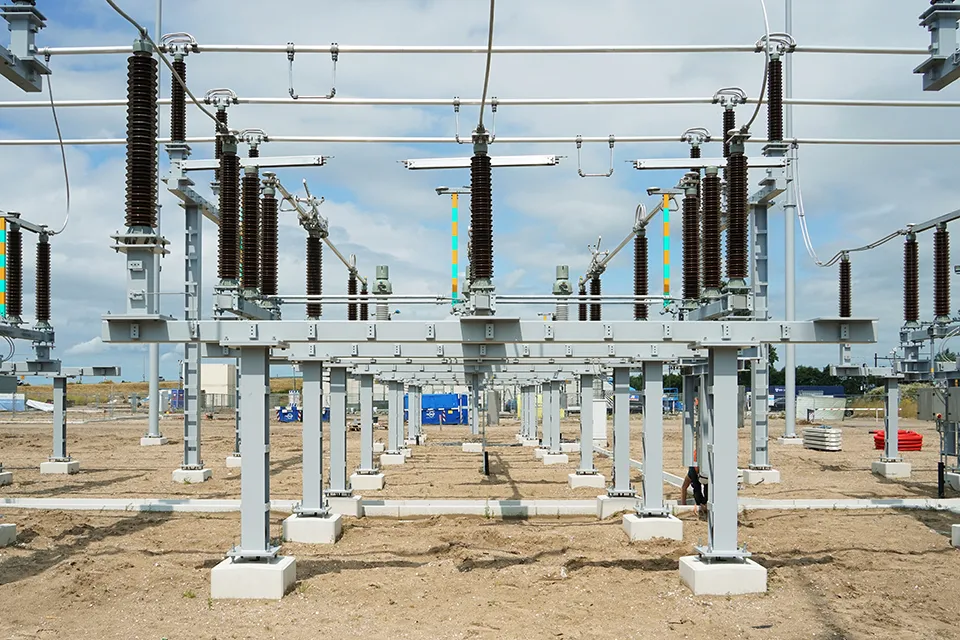
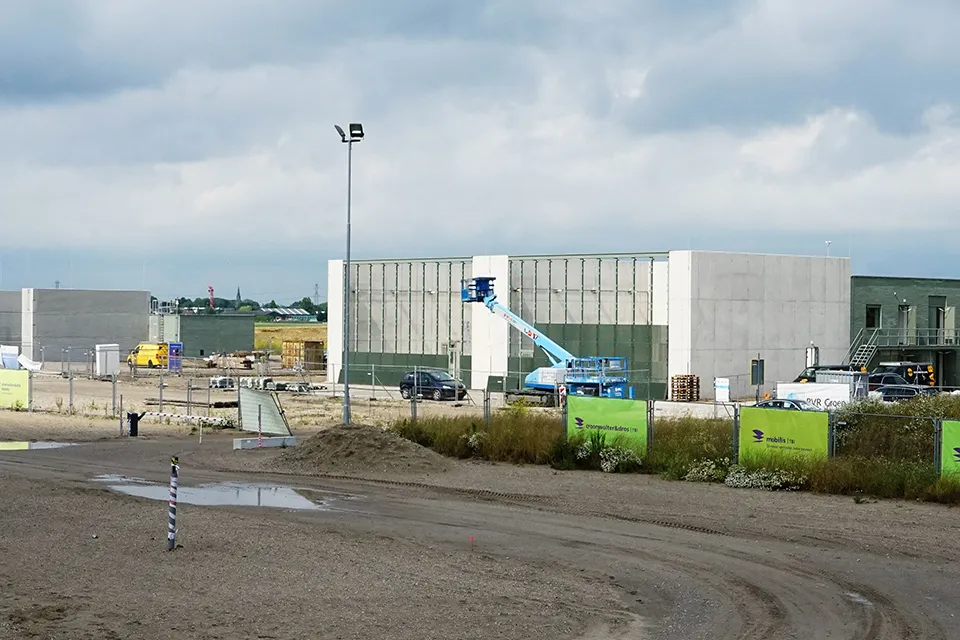
A new high-voltage substation is being built just east of the village of Zevenhuizen in South Holland (municipality of Zuidplas). This 150 kV installation will help TenneT, Liander and Stedin tackle grid congestion in the region. Construction consortium SC&M, a partnership between Croonwolter&dros and Mobilis, is also building a new 150 kV substation for TenneT at the 380 kV substation in Bleiswijk. Three new underground high-voltage circuits, each comprising three cables, will connect the two substations. Prefabrication and standardisation are playing a key role: dozens of similar projects will need to be delivered across the Netherlands in the coming years.
The substation is located at the junction of the N219 and the A12 motorway, and looks as though it could be energised at any moment. “Looks can be deceptive,” says Denis Walraven, Project Manager for Mobilis TBI. “That won’t happen until the end of 2025. We’re building the two substations and the new cable connection at the same pace, and they ultimately have to be completed at the same time. They also fall under the same project organisation. Stedin and Liander are building their own transformer substation on this site to convert the voltage to 20 kV.”
Increased capacity
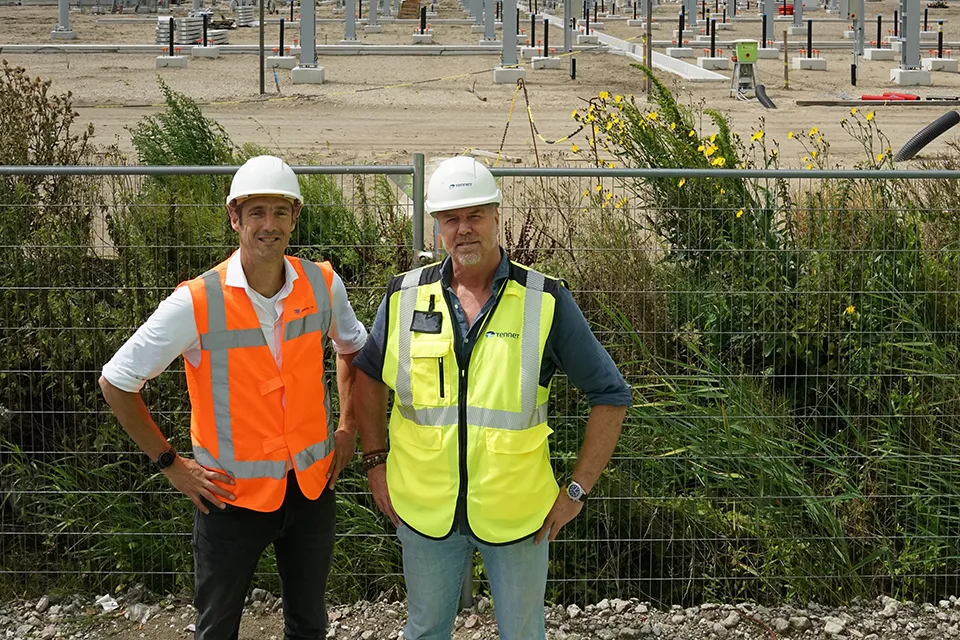
This new substation will secure the future electricity supply for Zevenhuizen, Waddinxveen, Lansingerland, Zoetermeer and Gouda. Walraven says: “Grid congestion is severe in the Rotterdam-The Hague-Gouda triangle, so this region needs a bigger switchboard. Existing customers currently cannot increase their capacity, new residential areas are being developed, businesses and solar farms in the region cannot be connected, and the greenhouse sector needs to move away from fossil fuels. This substation is therefore hugely important. We are also facilitating two new customers that are making a major investment in 100 megawatts of battery storage on the other side of the A12. These are important steps in the energy transition.”
In the spotlight
It is no surprise, then, that this project is attracting a lot of interest. Dirk van Reijendam, Project Manager at TenneT for both the Bleiswijk and Zevenhuizen substations, says: “It gets a lot of attention, partly because it is close to The Hague. We recently welcomed Sophie Hermans, Minister for Climate Policy and Green Growth, and the national opening of Construction Day was also held on this site. What we particularly enjoy is building this high-voltage substation together and contributing to the energy transition. It can be challenging at times. From design through to completion, you have to work together and rely on suppliers. That is why we took a very structured approach to procurement and opted for prefabricated and standardised solutions wherever possible. This is necessary, because TenneT will build dozens of new substations over the next ten years, while many existing ones will be replaced or expanded. SC&M is one of the selected contractors under a framework agreement to carry out this work.”
Mobriq
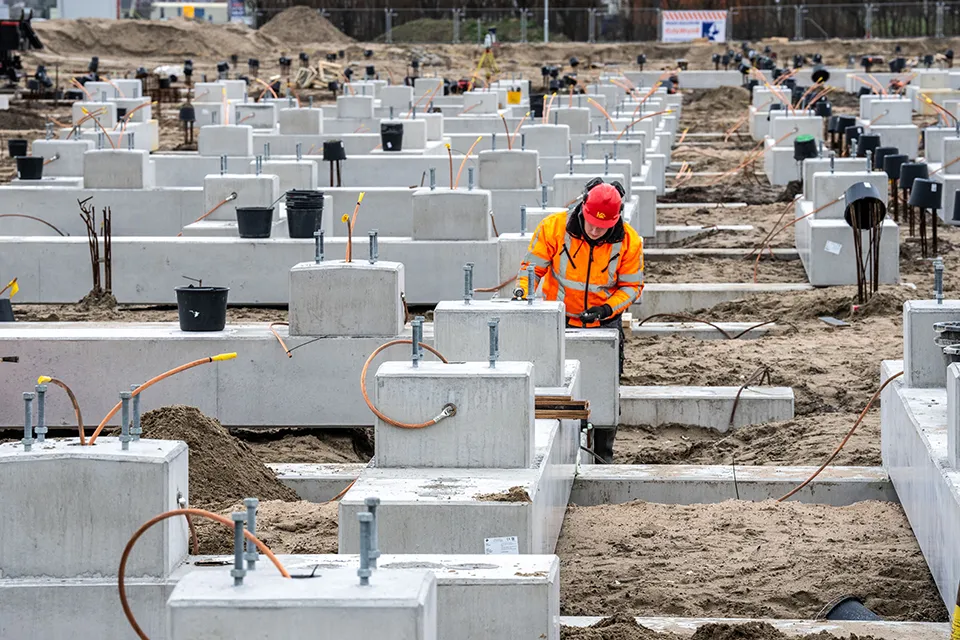
Mobilis and Croonwolter&dros have already completed several projects for TenneT. Work is now progressing at a good pace. “The last of the 881 piles was driven on the day of the official first-pile ceremony,” says Van Reijendam. “They form the foundations for the nineteen electrical bays, where power is distributed to the various consumers. We use Mobriq, a modular concrete system, to provide a solid base for the steel structures of the electrical bays. It consists of precast beams weighing six tonnes each, which allow us to build the foundations for the superstructure quickly and cost-effectively.”
Tested and approved
Mobriq was developed through the SC&M partnership to speed up the design and construction of the electrical bays. Walraven says: “A crane can build a bay in two days using standardised Mobriq beams, which we place on the foundations and then cast in. The system was developed on previous projects and, of course, tested against the applicable requirements. We can therefore use Mobriq on future projects without any problems. Ideally, I would make the blocks from geopolymer concrete, but further evidence is needed to show that it meets all the requirements. This installation must supply power for at least forty years before we make any changes to the foundations.”
Meccano
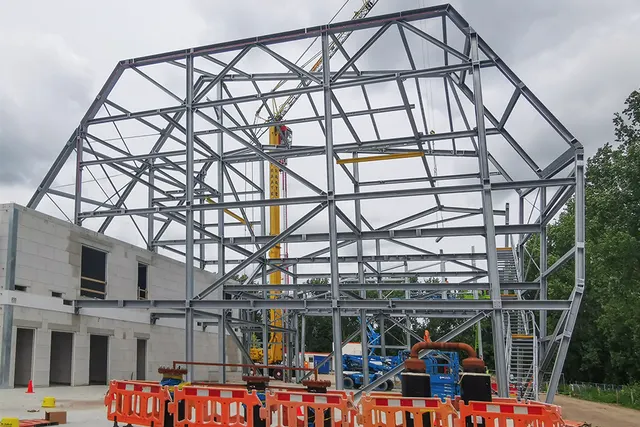
Standardisation and modular construction were also the guiding principles for the steel superstructure (Esystruct), on which the insulators and aluminium conductors are mounted. Van Reijendam says: “It looks like a Meccano set, with prefabricated columns and beams. We are continually learning how to make this construction kit lighter, cheaper, more uniform and more sustainable. The same applies to the logistics puzzle. Piling, placing the beams, installing the steelwork and fitting the electrical equipment: you want to organise all of this as smoothly as possible. Adding an extra bay for a battery, as in Zevenhuizen, is almost a matter of copy and paste, since it is very similar to the bays we are already building. A few spare bays have been built for future demand. Adding a bay once the power is on is not easy.”
Lightning protection
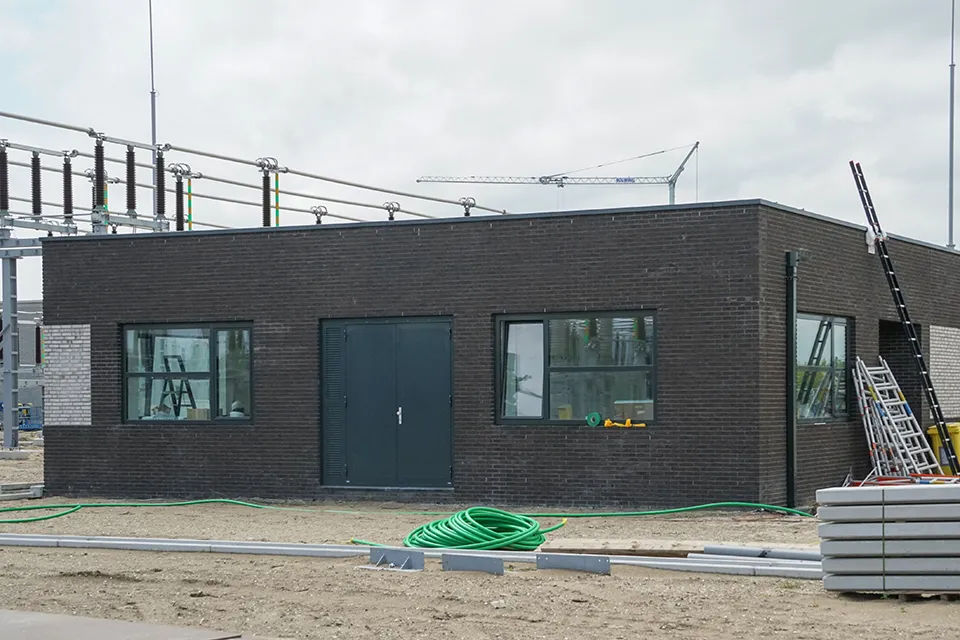
The highest point of the Zevenhuizen high-voltage substation was reached with the installation of the 24-metre-high lightning conductors. “This system is designed to keep lightning away from live components,” says Walraven. “Their height and position mean they intercept lightning within a certain radius and conduct it to the earthing network. This network has been installed beneath the entire bay. The reinforcement in all the components in the switchyard is connected to it.” The various central functions are housed in TenneT’s central services building. Walraven says: “These include the substation protection systems, low-voltage power supplies and connections to TenneT’s national telecommunications network. This allows the control and measurement values to be monitored and the substation to be operated remotely, as it is normally unmanned. The building is highly functional, with a raised access floor to accommodate all the cabling.”
Building even faster
Stedin and Liander’s substations stand alongside TenneT’s substation. Van Reijendam points out the differences in their designs: “They will have exactly the same transformers, which convert 150 kV to 20 kV. Yet one has opted for a building entirely above ground, while the other is building a basement. At TenneT, we are working hard with our suppliers to standardise our construction systems as much as possible. I am a strong advocate of this approach. It helps us build even faster as we work towards the energy transition.”
Vraag over dit verhaal? Stel je vraag
Blijf dit volgen
Bij een nieuw verhaal krijg je een e-mail. Geen account nodig.
- OnderwerpProjects