Sustainable fries factory in Poperinge
Tekst Roel van GilsBeeld Alheembouw
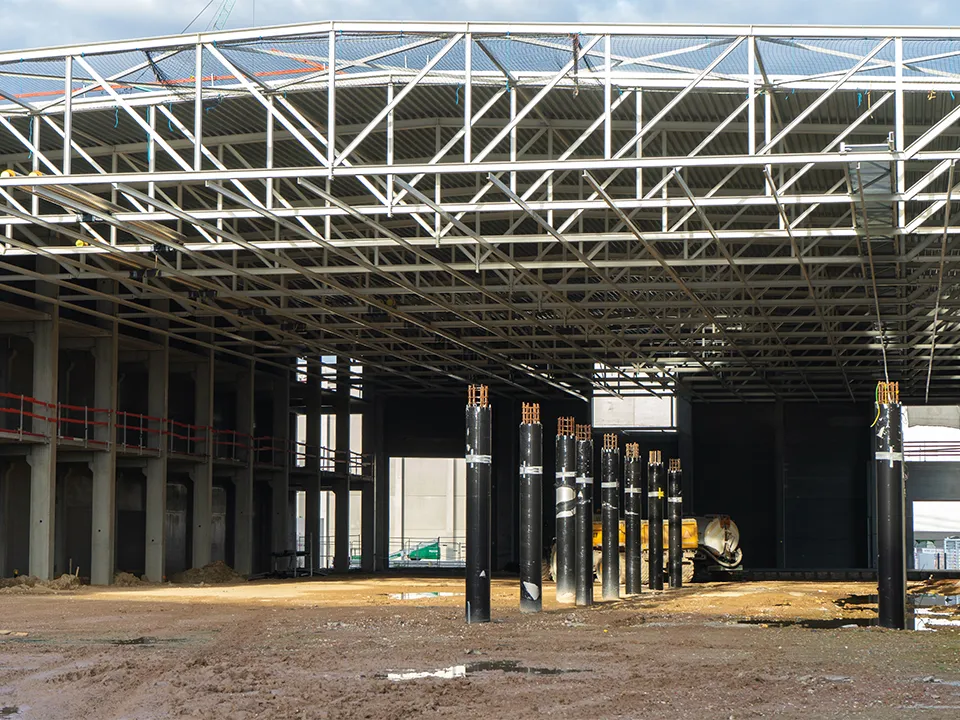
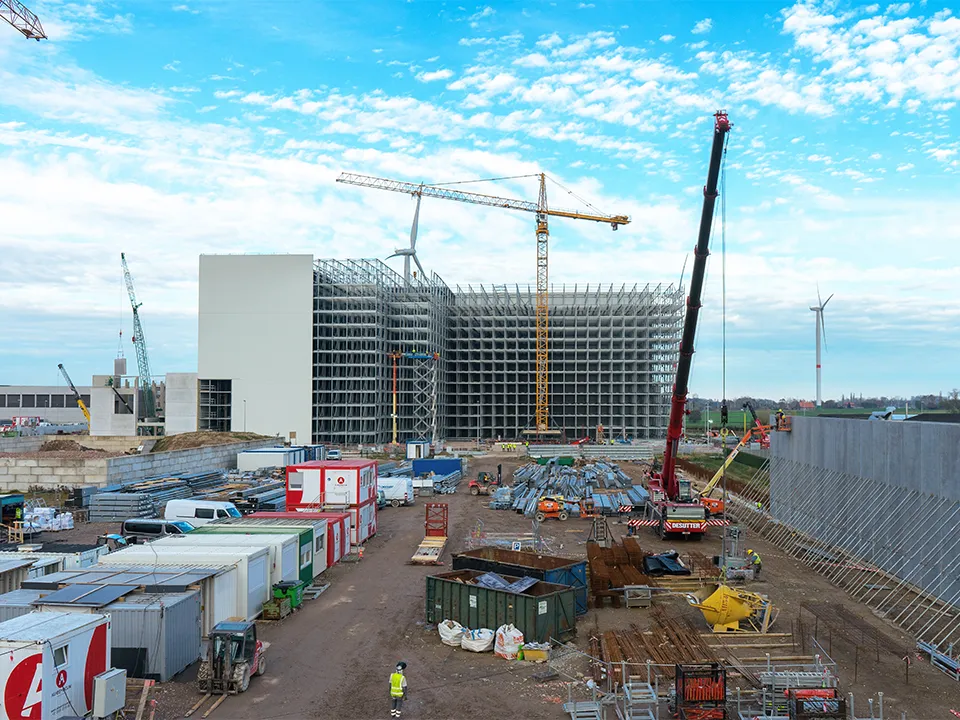
In Poperinge, Belgium, in the heart of the potato-growing region, Alheembouw is building a new production facility for Aviko.
The factory will have an annual capacity of 175,000 tonnes of frozen fries and 11,000 tonnes of potato flakes. Given the complexity and scale of the new factory, Aviko deliberately chose to tender the civil engineering works at an early stage. We speak to Cor Koole, project manager for Aviko, and Pieter Vandenberghe, Industry Director at Alheembouw.
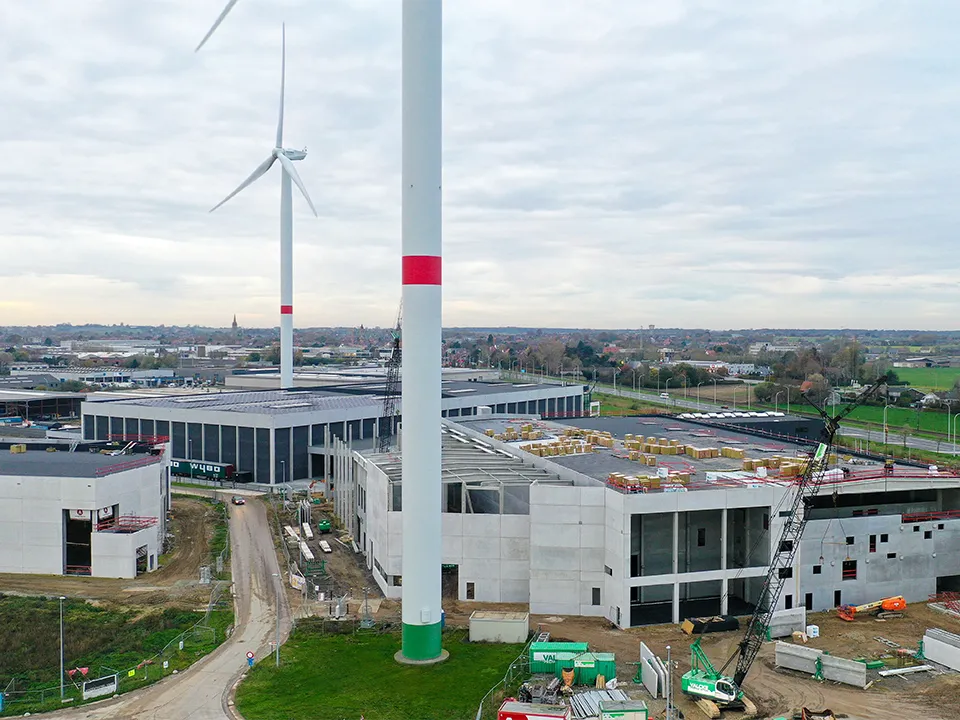
Aviko is one of Europe’s largest producers of fresh, frozen, dried and speciality potato products. “Despite the pandemic, the market for frozen potato products, mainly fries, is growing significantly,” Koole begins. “We are seeing rising demand for our products, particularly in Central Europe, North-West Europe and Asia. The planned capacity expansion will enable us to make the most of this fast-growing market and achieve our ambitious growth targets. Poperinge, in the south of Belgium, is a suitable location for several reasons. It is in the heart of an area where the potatoes we need are grown, and close to the ports at Zeebrugge, which is ideal for exports. The expansion will also create around 120 challenging vacancies to operate this modern factory.”
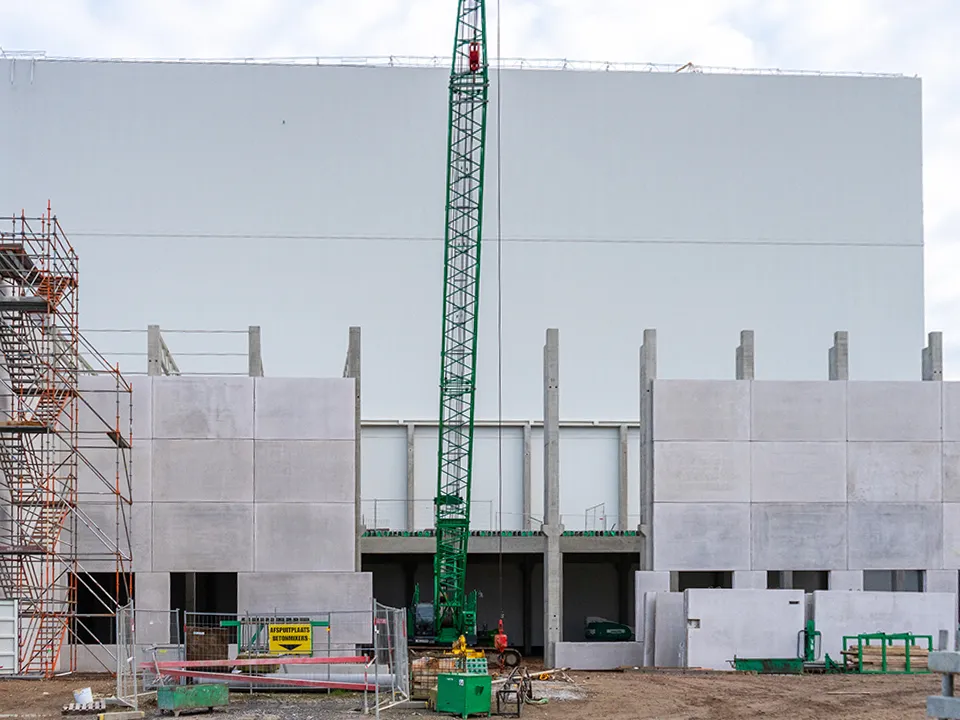
Greenfield site
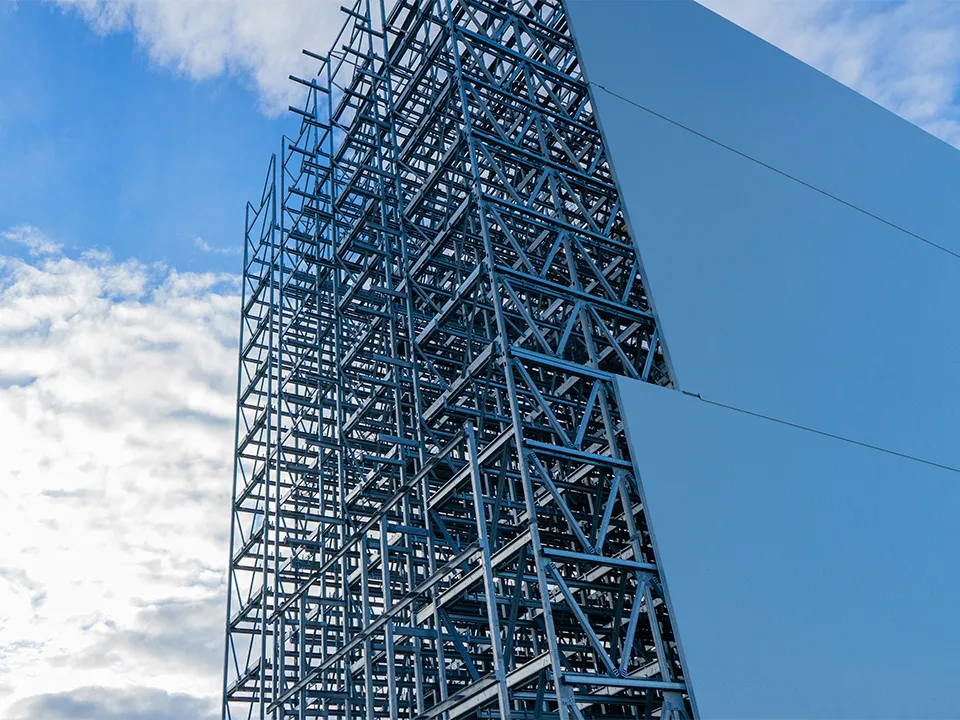
The new site is what is known as a greenfield site. “There was nothing here before,” says Koole. “We bought three plots. The first will house the reception and sorting facilities, a line for processing by-products and the energy utilities. Potatoes will be unloaded from lorries here and inspected for quality. After unloading, they will be washed, sorted and stored in bunkers for a few days. Depending on production requirements, we will combine the different grades or send them individually to the factory. The factory is across the road, on the second plot. Here, the potatoes will be peeled, brushed and cut. Checks will be carried out continuously throughout the process. The cut fries are then dried and cooked in a large fryer. Next, they go into the freezing tunnel, where they are frozen in several stages. In a large packaging area, the fries are packed into bags and then into boxes, which are transported on pallets to the cold store.” The 40-metre-high cold store has sufficient capacity to serve as a storage and distribution centre for products from other Aviko plants as well.
Potato Experience Center
The third plot will be used as a parking area for lorries that cannot load or unload directly at the loading bays. Koole explains: “The wastewater treatment plant will also be built here, where we will treat the used water so that it is suitable for discharge into surface water. In addition, we are building a large office complex next to the factory, which will include a Potato Experience Center. It is a demonstration space where we can prepare and showcase our products. A glass wall will also provide a superb view of the main production process. This will allow us to minimise visits to the factory itself, where various additional hygiene requirements apply.”
A familiar construction partner
The new factory is being built by main contractor Alheembouw. “We are a familiar partner of Aviko and have already carried out a great deal of work at the existing factory in Proven, not far from Poperinge,” says Vandenberghe. Alheembouw is a well-established name in industrial construction. “We have built a strong reputation and also carry out a lot of work for companies similar to Aviko. Even so, the new factory is a substantial project for us too. Opportunities like this do not come along every day. Building an entirely new site from scratch, on a greenfield site, is quite special.”
Alheembouw is responsible for the entire shell of the factory across the three plots, as well as the finishing work. Aviko is responsible for installing the equipment, work that is being carried out partly in parallel with the construction.
A three-way partnership
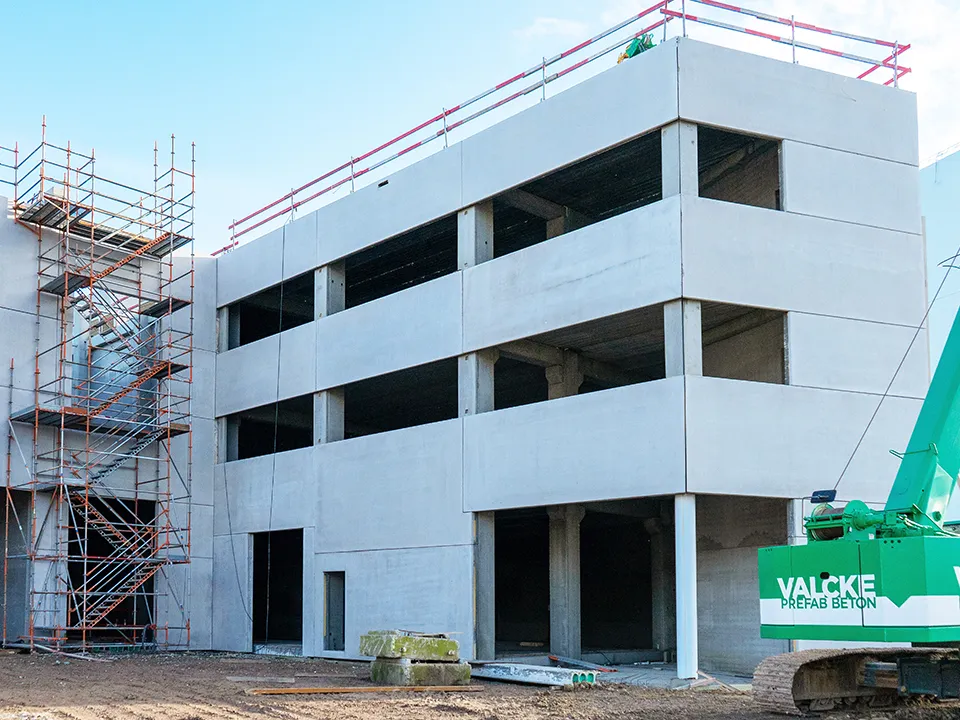
Aviko deliberately opted for a three-way partnership between the client, architect and main contractor. “This arrangement works exceptionally well,” says Vandenberghe. “We benefit from one another’s knowledge and experience, making the construction process more pleasant and cost-effective for everyone. As I said, this is a great project for us, with a wide variety of work. Our employees can also make full use of their expertise here. Many parts of the factory are made from precast concrete, with the exception of the wastewater treatment plant. That is a real tour de force in its own right. Wastewater treatment plants are usually built with round tanks; here, the tanks are rectangular and cast in situ (3,000 m²), which is our core business. Everything has to be perfectly watertight. In addition, PE lining is cast into the concrete at various points during the pours. This provides extra protection for the concrete, given the aggressive environment in the wastewater treatment plant. It will be an excellent reference once it is completed.”
Sustainability ambitions
Aviko aims to achieve growth in a sustainable and responsible way, with respect for people, society and the environment. “Sustainability is a key priority at the new factory,” says Koole. “This is reflected in combined heat and power generation, minimal loss of potato material through the full reuse of by-products and water, solar panels on the roof and an energy-efficient cold store.”
A potato is 80% water, so it contains relatively little dry matter. “That is also why we are building the factory in the heart of a potato-growing region, so that we transport as little water as possible by road. Fries, by contrast, consist of around 65% dry matter. It is therefore far more efficient, both economically and environmentally, to transport fries by road rather than potatoes. Moving potatoes requires many times more lorries than transporting the finished product.”
Alheembouw started work on site in October 2019. “The new factory is being handed over in phases,” says Vandenberghe. Everything will be operational by March 2022. Aviko will ultimately be able to produce 175,000 tonnes of fries a year. That means around 60 tonnes of potatoes will be processed on the production line every hour. It is a challenge to get everything organised on time and bring the subcontractors on board, but Alheembouw is well equipped to handle that. “For us, the new factory is an excellent reference in the industrial sector, where we first made our name.”
Vraag over dit verhaal? Stel je vraag
Wie aan de nieuwe fritesfabriek van Aviko werkte
- bouwkundig aannemerAlheembouwIn dit verhaal
- prefab betonstructuur en prefab gevelpanelen
 Valcke Prefab BetonGenoemd in Precast frame for sustainable chip factory
- fundering van de nieuwe fabriekVotquenne FoundationsGenoemd in New French fries factory rests on 2,718 ground-displacement screw piles
- opdrachtgeverAvikoIn dit verhaal
- RVS-afwateringssysteemSandstra BelgiëGenoemd in 1,250 metres of stainless steel drainage channels and more
Blijf dit volgen
Bij een nieuw verhaal krijg je een e-mail. Geen account nodig.
- ProjectFritesfabriek Aviko
- ThemaMinder CO2 in beton en staal
- OnderwerpProjects
- BedrijfAlheembouw
- BedrijfAviko