









Formwork engineering provides a solution for the complex basement structure beneath the new UvA university library
Text NOE-BekistingtechniekPhotography NOE-Bekistingtechniek
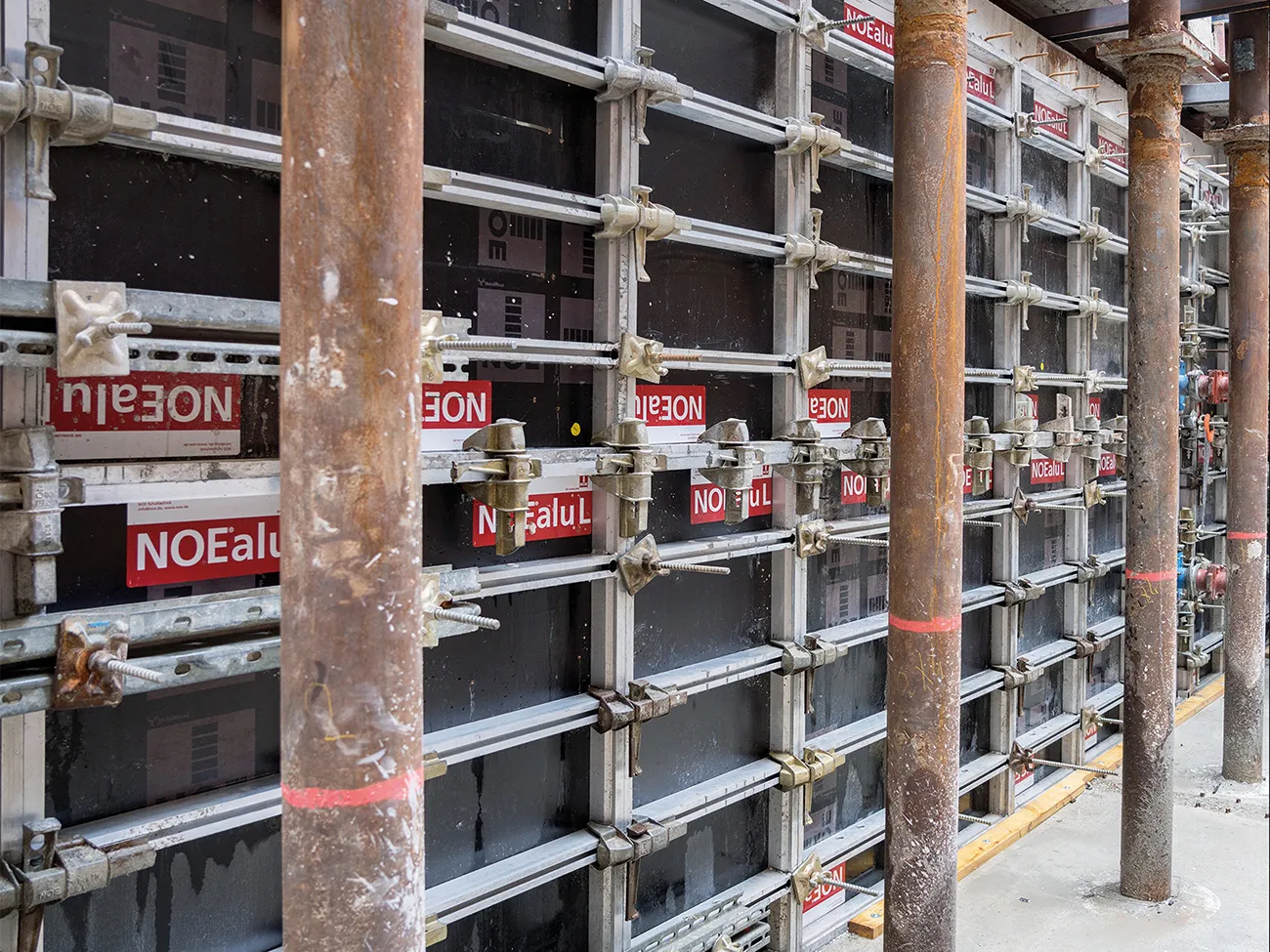
The University of Amsterdam (UvA) is consolidating its teaching and research facilities, reducing them from around 85 buildings to four campuses across the city. One of these, the University Quarter, will also be home to the University Library. To this end, the former Binnengasthuis hospital is being renovated and extended with new-build construction. To encourage cycling as much as possible, a large underground cycle parking facility for 950 bicycles is being built. NOE-Bekistingtechniek developed a special formwork solution for the inner and outer walls of this basement.
The Binnengasthuis site in the University Quarter has a long history of serving a variety of purposes. Its history dates back to the Middle Ages, when the Old and New Convents stood here. The area has been home to a convent, hospital, museum, residential neighbourhood and university. The University of Amsterdam began here as the Athenaeum Illustre in 1632. The monumental Second Surgical Clinic and Nurses’ Home of the former Binnengasthuis hospital are now being renovated and complemented by new-build construction, creating a single building for the library. Striking features of the design include a spectacular glass roof and a new-build wing. Considerable construction precision is required to build a basement with a sunken atrium beneath the existing building.
Remarkable basement construction
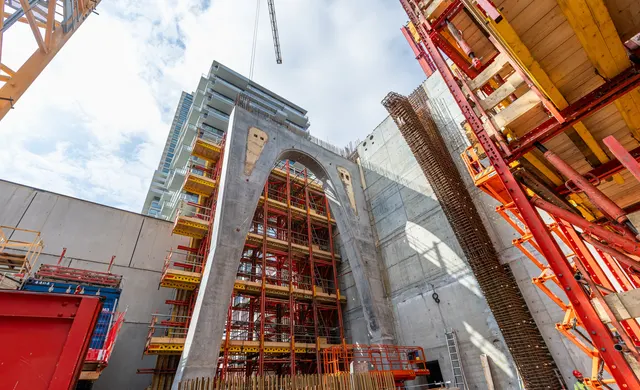
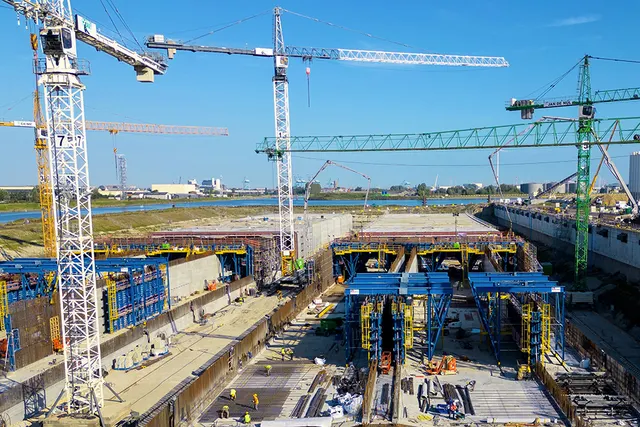
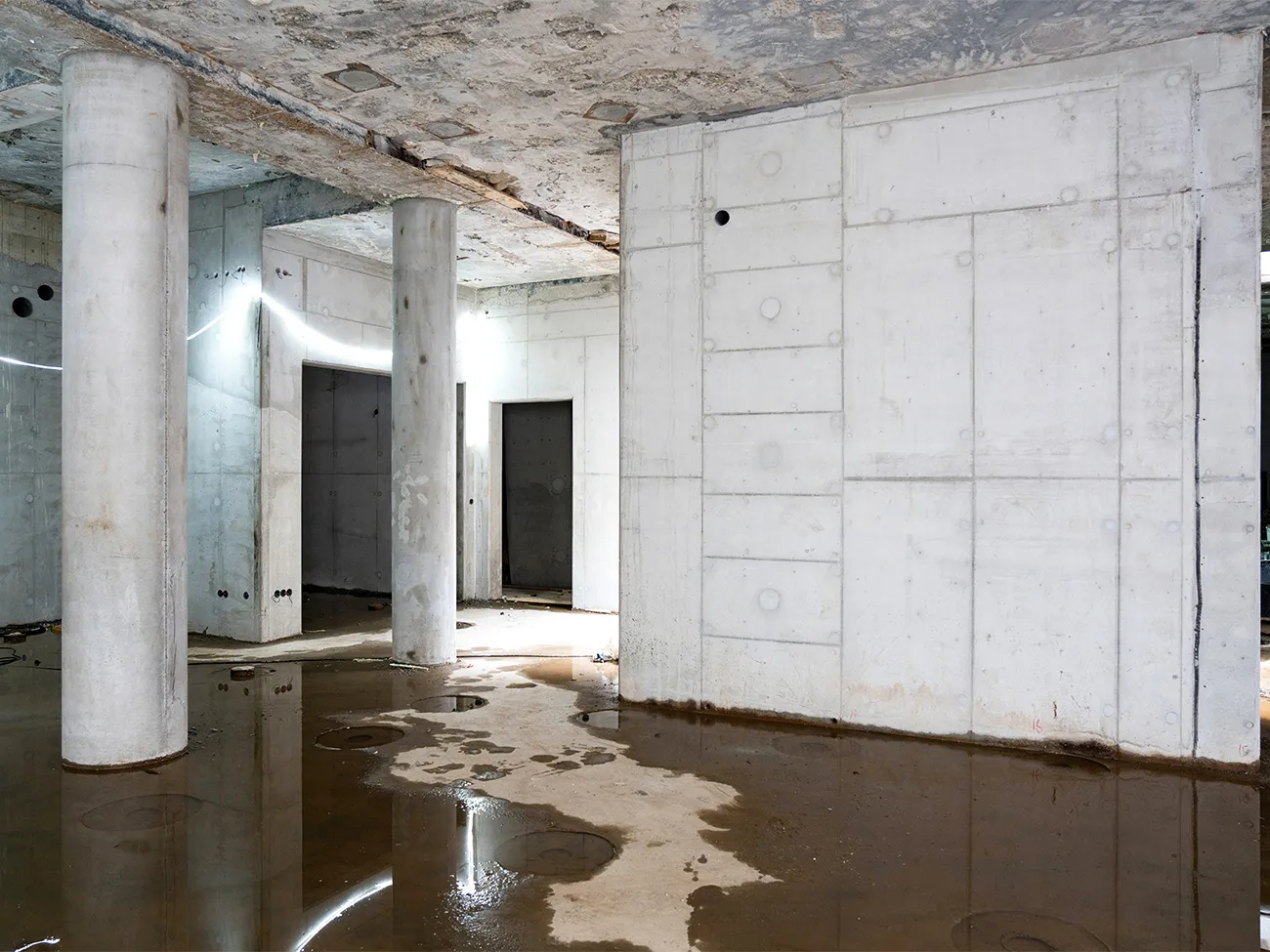
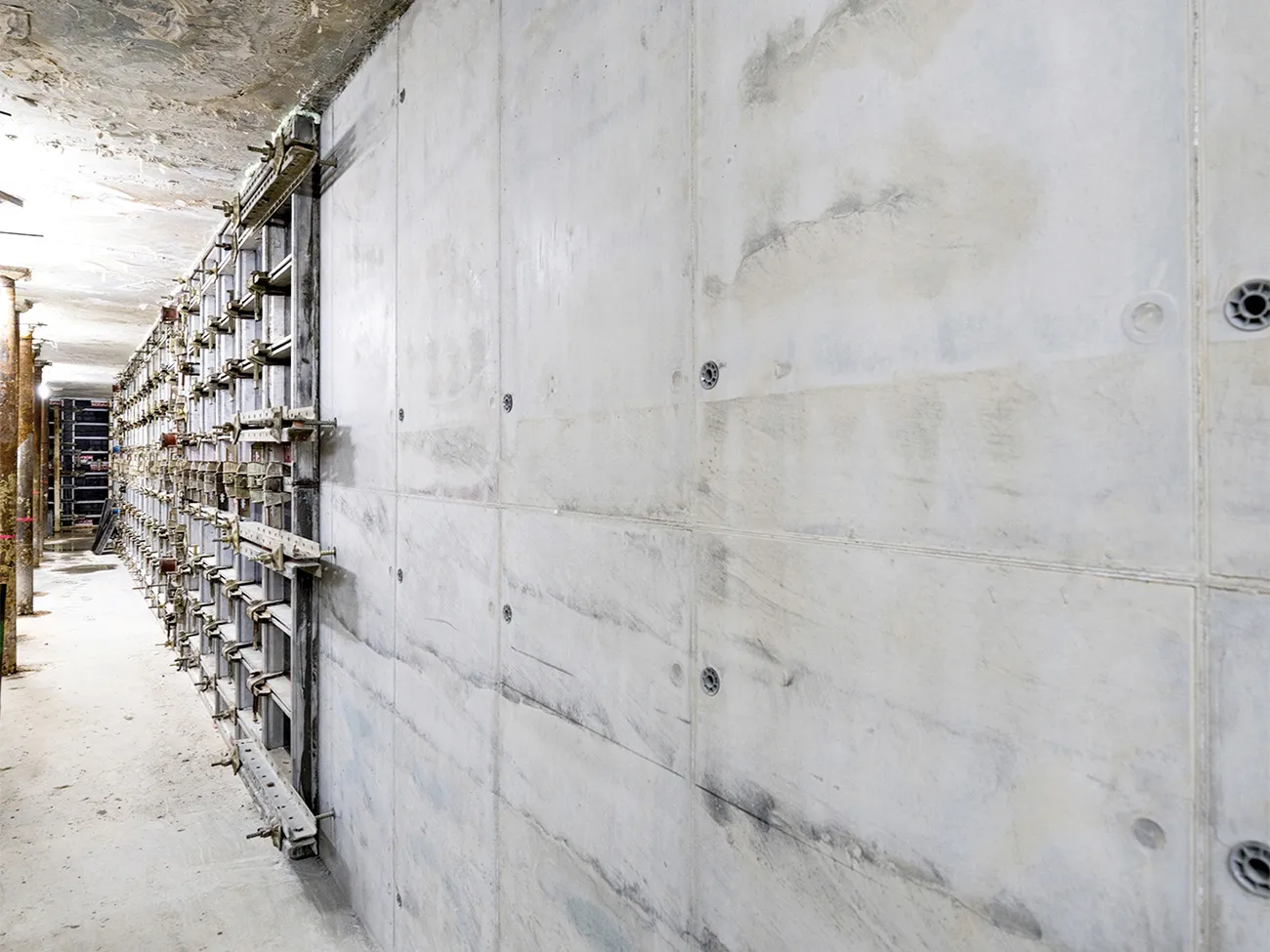
Basement construction in Amsterdam’s historic city centre is being carried out by Van Hattum en Blankevoort & Volker Staal en Funderingen. The many alterations and extensions made to the building over the years have resulted in a complex basement shape. To construct the basement beneath the building, piles and temporary steel beams were first installed under the listed building to support the load of the entire structure. The foundation beams were then demolished and a new ground-floor slab installed. With the supporting structure in place beneath the future library, the ground could be excavated to a maximum depth of 5 metres and a concrete basement floor cast. All the inner and outer walls then had to be built between the two floors. The walls follow the shape and layout of the existing building.
Easy-to-handle, load-bearing formwork system
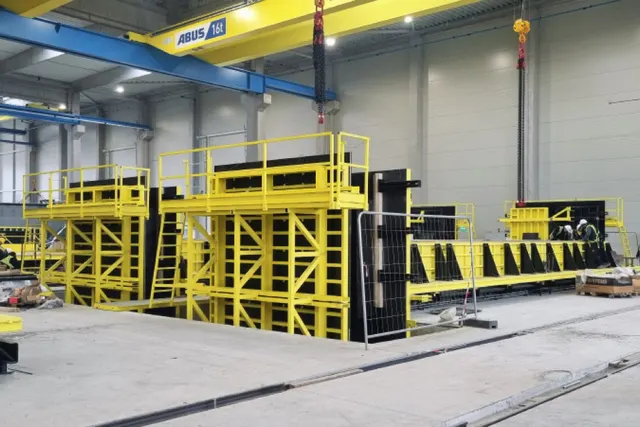
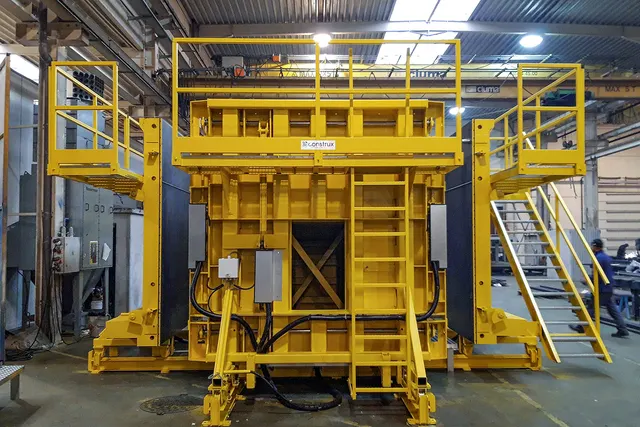
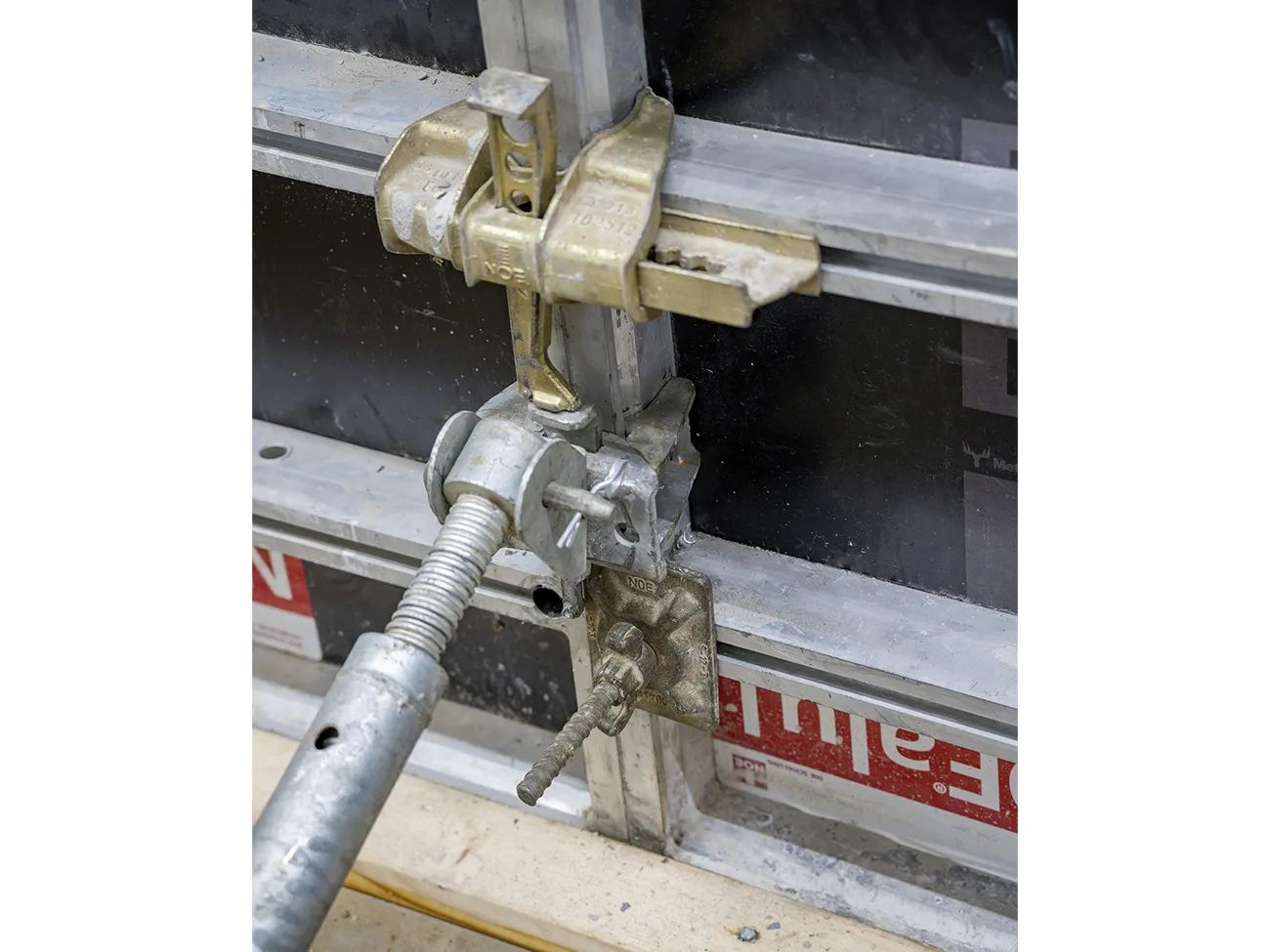
For the formwork for these walls, Van Hattum en Blankevoort needed a solution that was not only easy to handle and install, but could also withstand a concrete pressure of up to 65 kN/m2. NOE-Bekistingtechniek provided a solution meeting both requirements with its NOEalu L formwork system. This lightweight aluminium wall formwork is easy to handle while still withstanding high concrete pressures. NOEalu L was developed as a system that can be moved by hand while also meeting the project’s required concrete placing pressure.
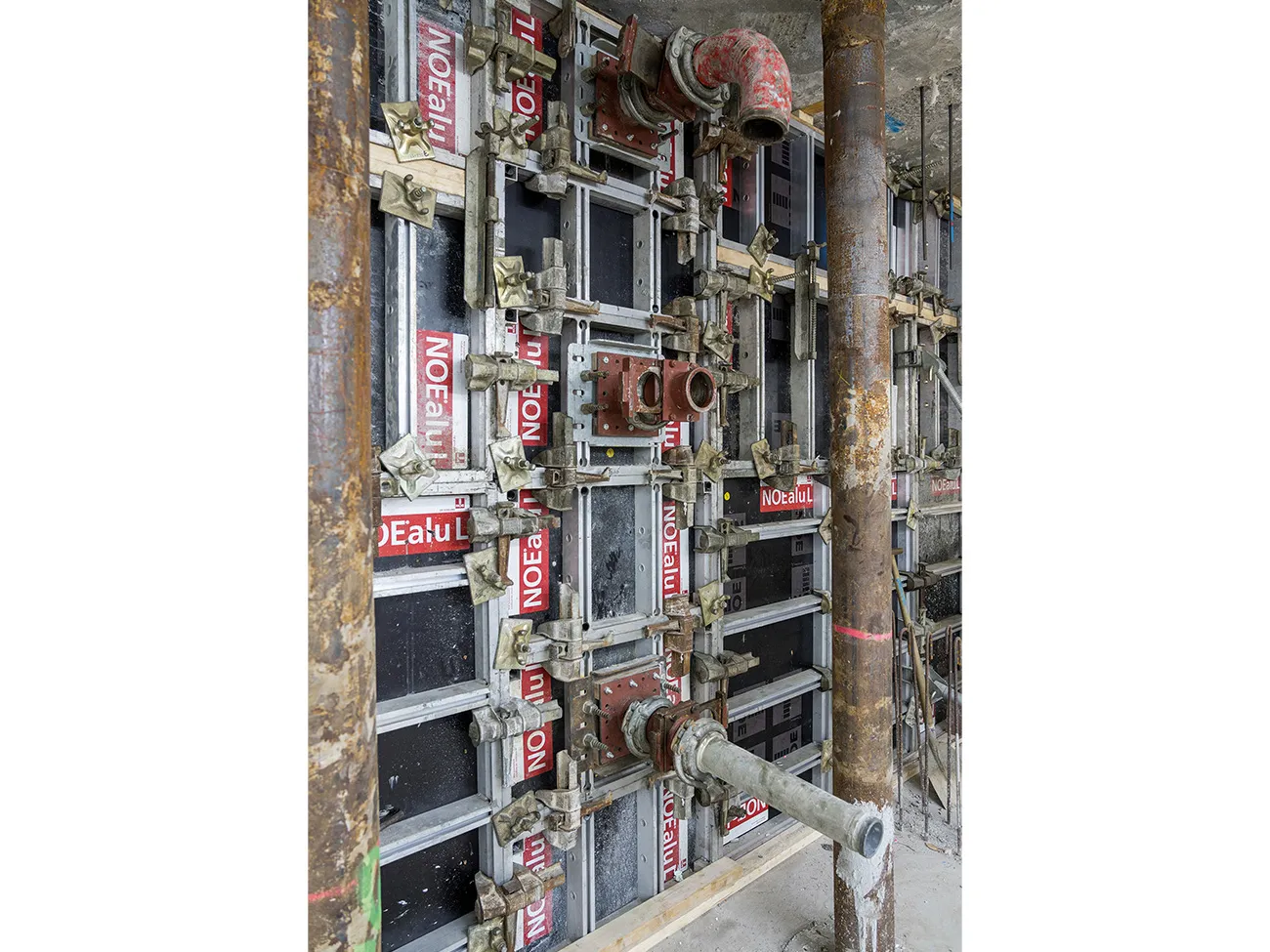
Pumping concrete into the formwork
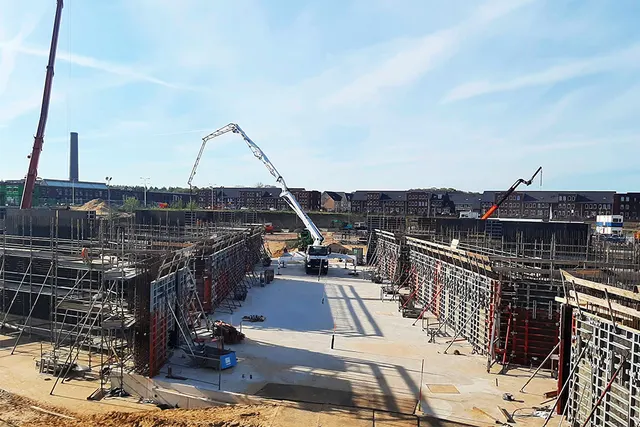
The challenge was placing the concrete. Concrete is normally poured into the formwork from above, while it is open at the top. This was not possible with formwork enclosed at both the top and bottom, so self-compacting concrete was pumped in instead. NOE-Bekistingtechniek provided a solution by fitting the wall formwork with filling ports at strategic locations, positioned at heights of 0.5, 1.5, 2.5 and 3.5 metres. The filling ports, to which the concrete pump was connected, were fitted with valves so that the concrete could be placed in 1-metre layers. The self-compacting concrete mix was designed to flow up to 10 metres in either direction. Vent holes at the ends of the formwork panels allow air to escape as the concrete rises.
With the new foundations and basement walls nearly complete, the temporary steel beams can be removed from the building one by one. In addition to cycle parking, the additional floor space provides room for building services, the book collection and returns service (pick up & return), and a multifunctional sunken atrium. The university library is expected to open in 2023.
A business enquiry for NOE-Bekistingtechniek? Get in touch
Who worked on the new Universiteitsbibliotheek
- design of the new UniversiteitsbibliotheekMVSAMentioned in Spectacular atrium roof connects old and new in a respectful way
- basement constructionVan Hattum en Blankevoort & Volker Staal en FunderingenIn this story
- geotechnical consultantCRUX EngineeringMentioned in A remarkably impressive piece of foundation work
- construction consortiumVolker Staal en FunderingenMentioned in A remarkably impressive piece of foundation work
- construction consortiumvan Hattum en BlankevoortMentioned in A remarkably impressive piece of foundation work
- architectArchitectenbureau J. van StigtMentioned in A remarkably impressive piece of foundation work
- adviserVan Rossum Raadgevende IngenieursMentioned in A remarkably impressive piece of foundation work
Keep following this
Get an email when a new story is published. No account needed.
- ProjectUvA university library
- SubjectFormwork
- CompanyVan Hattum en Blankevoort & Volker Staal en Funderingen
- CompanyNOE-Bekistingtechniek